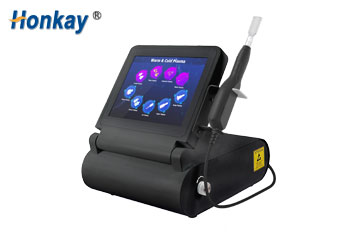
If you have been keeping a pulse on the latest aesthetic-grade beauty trends, you’ve likely seen the stunning transformations circulating on social media. The "liquid facelift" is no longer just about fillers; it is about the rise of energy-based skin resurfacing. Specifically, the full face plasma pen has emerged as a game-changer for those seeking a non-surgical skin tightening solution that delivers skin lifting effects without the need for traditional surgery.
But what exactly constitutes a "full face" example of this technology? It isn't just one static tool—it is a sophisticated synergy of physics and skincare science designed to rejuvenate your entire complexion.
To understand a modern full face plasma pen, we first have to look under the hood at the dual technologies driving the results. Most high-end, professional standard setups today utilize a hot plasma and cold plasma device approach.
Traditionally known as fibroblast skin tightening, hot plasma uses localized thermal energy to create tiny, controlled points of "micro-trauma" on the epidermis. When the pen’s tip approaches the skin, it ionizes the nitrogen in the air to create a plasma arc. This arc causes the skin to contract immediately.
This is particularly effective for targeted areas like hooded eyelids, crow’s feet, and nasolabial folds. By triggering the natural healing process, the skin begins a cycle of cellular regeneration, leading to long-lasting collagen and elastin stimulation.
Unlike the precision-point "dots" of hot plasma, the "cold" or atmospheric plasma energy is a non-ablative powerhouse. A jet plasma pen treatment focuses on a high-voltage, low-temperature stream of ionized gas. It doesn't create visible surface damage, meaning there is downtime-free skin care for the user. It works by increasing the permeability of the skin, allowing for deeper absorption of active ingredients while simultaneously sterilizing the surface to treat acne scars and hyperpigmentation.
When we talk about a "full face" application, we are usually describing the jet plasma pen treatment. While traditional fibroblast is used for specific fine lines and wrinkles treatment, Jet Plasma is swept across the entire face, neck, and even décolletage to provide a comprehensive non-invasive facial rejuvenation.
The visual results of a full face session are often described as a "brightening" or "instant glow." Because the energy reaches the dermis without breaking the skin barrier, it remodels the cellular structure from the inside out. This leads to significant skin texture improvement and helps with skin elasticity, making it an ideal anti-aging beauty tech choice for those who cannot afford the week-long scabbing associated with older methods.
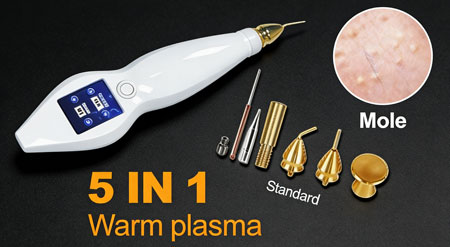
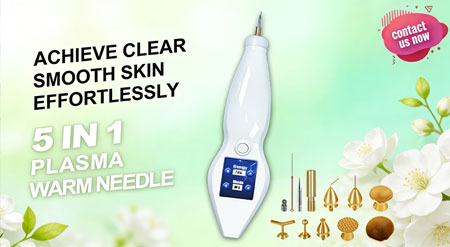
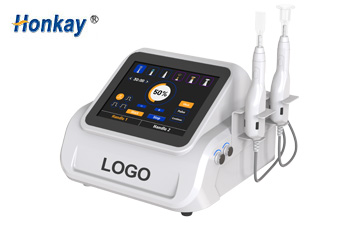
So, what is a concrete example of a full face plasma pen in a professional setting? A prime example would be a professional aesthetic device that features interchangeable heads—combining a precision probe for targeted lifting and a broad, "jet" tip for full-face coverage.
The primary "Desire" for most clients is a cohesive look. Treating only the eyes can sometimes leave the rest of the face looking dull by comparison. A full face plasma pen ensures that the collagen and elastin stimulation happens uniformly.
Whether you are dealing with nasolabial folds, general fine lines and wrinkles, or simply want that clinical-strength lift, this technology offers a bridge between over-the-counter creams and invasive procedures. It’s about achieving long-lasting effects with a professional-grade device that respects the integrity of your skin barrier.
The world of plasma technology for skin is evolving rapidly. If you are tired of temporary fixes and are looking for a regulatory compliant way to transform your complexion, it may be time to consult with a specialist.
Are you ready to experience the skin lifting effects for yourself? Whether you are looking for a jet plasma pen treatment to clear up your complexion or a comprehensive full face plasma pen session to reclaim your youthful contour, the future of beauty is definitely in the "fourth state of matter."
Would you like me to help you find a list of questions to ask your aesthetician before your first plasma session?




 English
 中文
中文
 Español
.jpg)