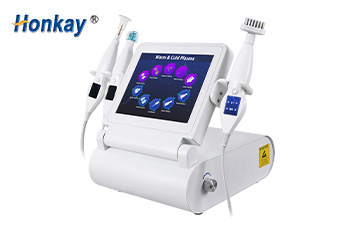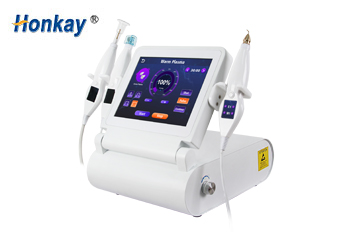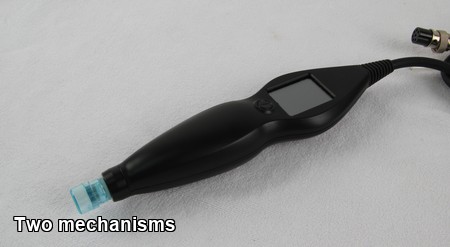
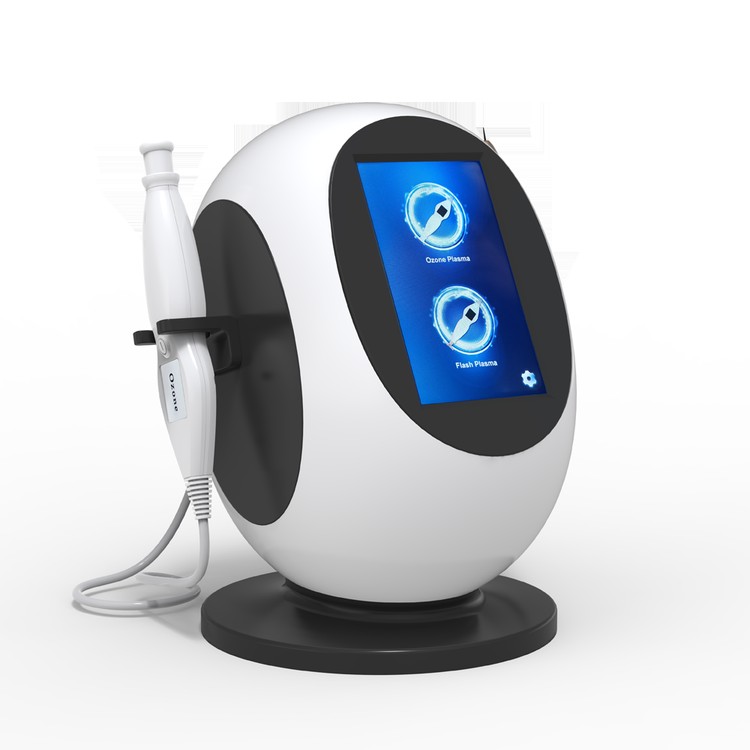
Three cold plasma formats are sold to clinics: a handheld pen, a box unit with a cable, and a rounded desktop unit with a built-in stand. They use the same principle and suit different rooms.
Choosing badly costs more than money. A pen that cannot reach the body, or a box that needs a trolley in a small room, both slow a diary down every week.
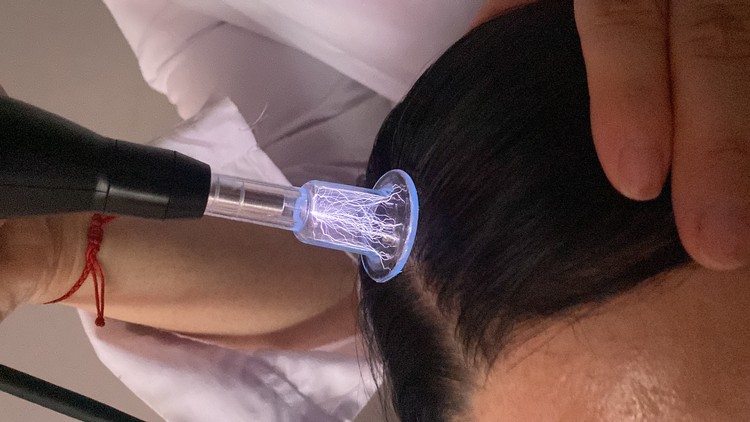
All three create a plasma discharge at a probe tip. What changes is how the energy is delivered, how many probes you can fit, and where the unit has to live.
The clinical result depends far more on the probe and the operator than on the shell. Format is a logistics decision with a clinical edge.
A pen is the fastest way to start. It fits in a drawer, needs one socket, and reaches the neck, the hairline and the jaw without moving a client.
Its limits are power and stamina. Long body sessions drain a small unit, and a light handpiece still becomes heavy after twenty minutes of precise work.
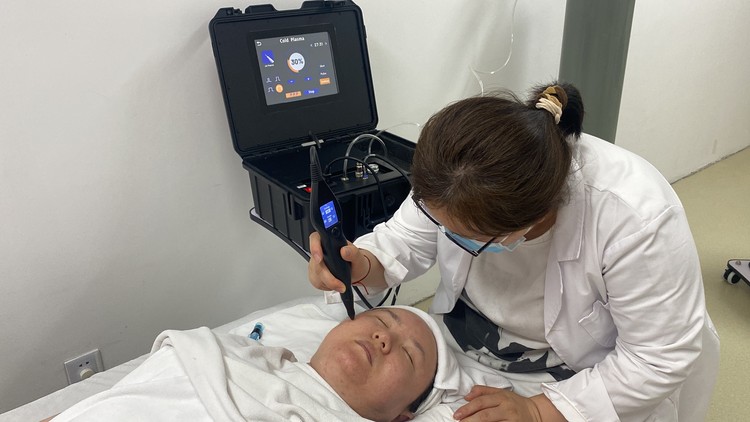
A box unit puts the generator on the trolley and the weight in your hand only as a handpiece. It carries more probes and holds output better across a long session.
It also needs real estate. Cable length, trolley height and a socket near the bed all become part of the room plan before the first client arrives.
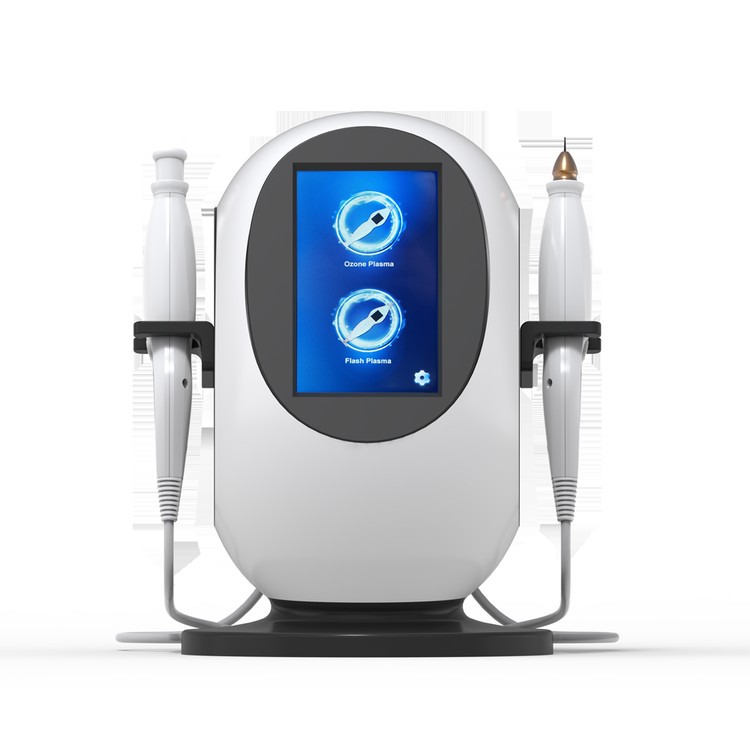
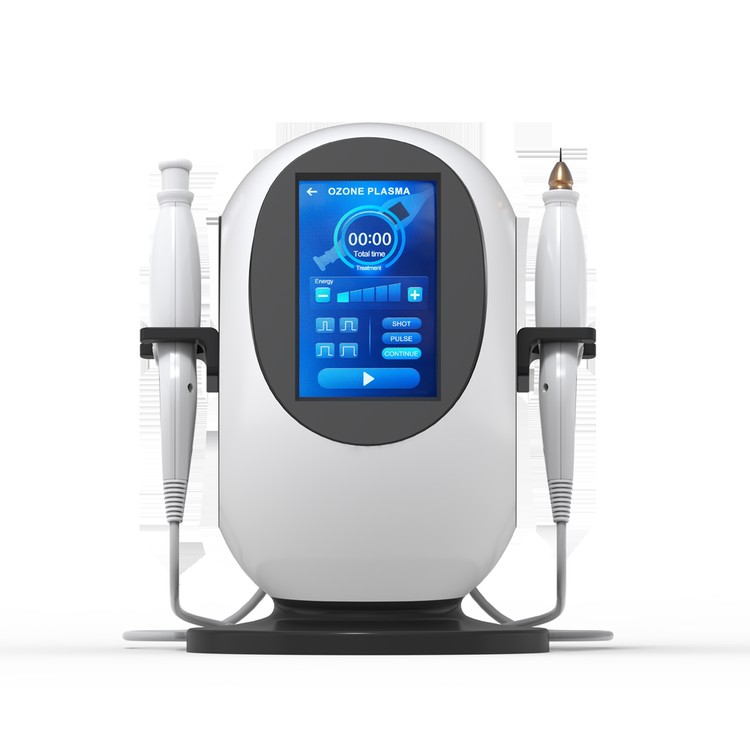
A rounded desktop unit reads as equipment rather than a gadget. Clients notice it, which helps on a menu board and in photographs.
Its handpieces hang on the body of the unit, so setup is short and the working area stays tidy. That tidiness is worth more in a small room than extra power you never use.
| Format | Strongest for | Watch out for |
|---|---|---|
| Handheld pen | Face, neck, hairline, small areas | Battery and heat on long sessions |
| Box unit | Body work, multiple probes, full days | Cable routing and trolley space |
| Spherical unit | Small rooms, visible retail setting | Fewer probes, less reach |
Write your ten most common treatments first, then mark which format reaches all ten. If one format covers eight, start there.
Measure the gap between the bed and the wall before ordering. A box unit needs a trolley width plus room for the operator to pass behind it.
Storage matters as much as footprint. Probes, gel, wipes and a spare handpiece all need a place that is not the treatment bed.
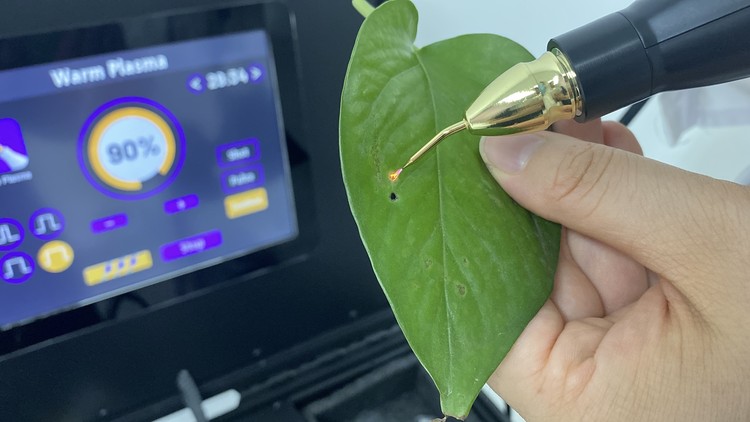
Many clinics end up with a pen for add-ons and a box for body sessions. That is not indecision; it is matching the tool to the appointment length.
If budget allows only one, buy the format that fits your longest appointment. A pen that runs out of heat mid-session is worse than a box that takes floor space.
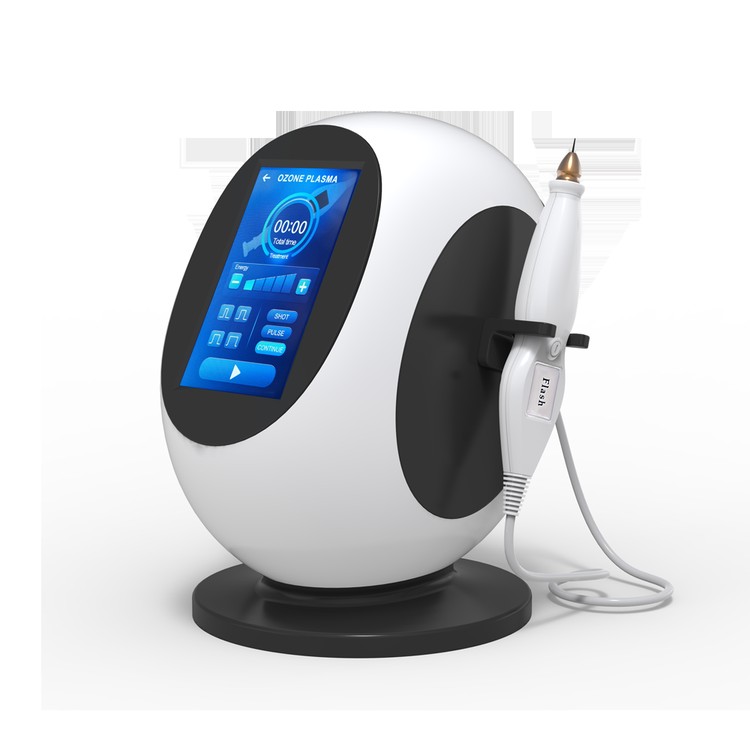
A spherical desktop unit or a pen. Both need one socket and no trolley, which matters when the bed sits close to a wall.
For face and neck work, close enough. For long body sessions it will struggle with heat and battery, and the probe range is usually smaller.
A box unit with a cabled handpiece. The generator stays cool, probes can be swapped between clients, and the handpiece is light enough for a full day.
Yes, and they are rarely interchangeable. Confirm the probe range and the replacement price for the exact model before ordering.
It moves between rooms easily but it is not a travel device. If you need to treat in clients homes, a pen is the practical choice.
The one with the clearest output display. A visible energy readout shortens training more than any other feature.
Yes, and most clinics do. Keep the probe family consistent so consumables and training carry over. Every unit we ship carries a 24-month warranty.
Tell us your three most common appointments and the space you have. We will tell you which format reaches all three without a trolley fight.
Buyers can reach our team on WhatsApp at +1 (213) 824-3777, or by email at honkayplasma@gmail.com.




 English
 中文
 Español